
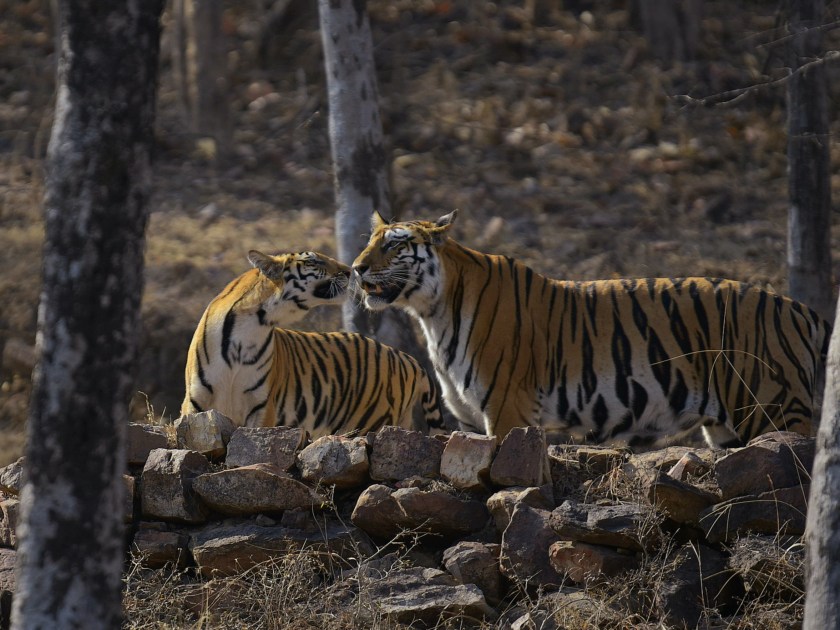
An unusually wet March afternoon greeted us as our car made its way to Panna Tiger Reserve – the emerald forest of India. Panna does not enjoy the attention like Bandhavgarh or Kanha, maybe because of its location (not well connected to big cities by flight) but its importance in India’s Tiger Conservation is probably second to none.
We learnt about the existence of Panna on both ends of the conservation spectrum – a thriving population of big cats in the early 2000s that lost its battle against the continuous poaching, numbers dwindling to almost zero in 2009, and a determined forest department led by IFS R Sreenivas Murthy and his team who helped regain the lost glory !
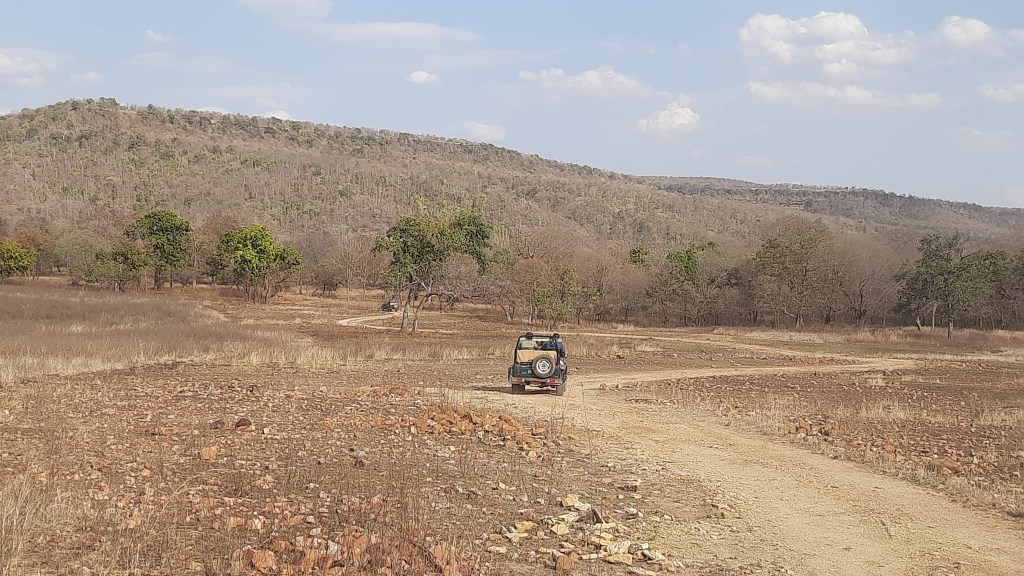
Panna Tiger Reserve (this was earlier a village )
A Slice of History
In 2010, a decision was made to bring two adult tigresses from Bandhavgarh and Kanha – T1 and T2. There was a lone male tiger in Panna and the FD hoped it would mate with T1 and T2 to produce litters. Conservation is of little success unless the local population participates – the local Pardhi tribes were convinced by NGOs to give up hunting as vigilance was imposed to lower incidences of poaching!
First Hurdle
Just when it seemed that Panna would thrive again, the lone male tiger vanished and the project met a stumbling block! The official count was now ZERO – so what next? A revised plan saw a determined Forest Department bring in T3, an adult male from Pench hoping that T3 would mate with T1 and T2 and give back Panna what it wanted – a new generation of tigers.
Second Hurdle
Tigers have emotions – our guide told us the story of T3, the new male brought from Pench. He left the landscape of Panna and started heading home (have you ever heard of such behaviour?)
It took relentless effort by the forest staff, who ventured into all directions and despite communication hassles finally managed to track T3 after spraying an extensive area with female tiger urine, to lure him with pheromones from the opposite sex !!! Fact is stranger than fiction they say and we realized this as our guide went on narrating the story. T3 came back to Panna!!
New Generation
In April 2010, T1 gave birth to new cubs followed by T2 in October 2010. Panna gradually turned into a safer haven for tigers as T1 went on to give birth to 13 cubs in 5 litters!
T4 and T5 – the two orphaned sisters from Kanha were brought in 2011 to bolster the tiger numbers and again Panna witnessed a rare event where T4 was taken care of by the male T3, who taught her to hunt and subsequently mated with her!
As the guide paused, we came across gypsies informing us about tiger movements! T1 is no longer there but her daughters still reign here. A few anxious moments passed by as T141 emerged with her cubs (she is the 1st female cub of T1’s 4th litter. The first 1 in “T141” stands for T1, 4 stands for her litter number and the last 1 stands for the cub number in that litter – that’s how the tigers in Panna are being numbered as the FD maintains its database)
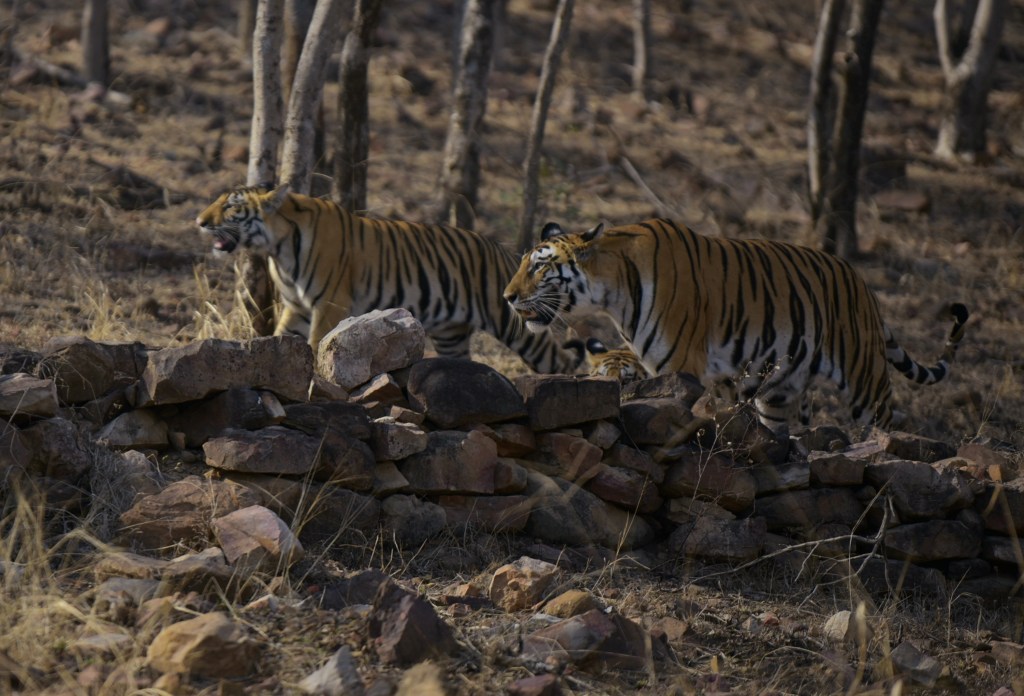
T141- T1’s legacy lives on!!
As we clicked and watched T141 gingerly walk past the gypsies on this unusually cool 1st April morning (We were April fooled once during the safari though), our moods were different! This was not any ordinary tiger sighting for us – we all were witnessing through T141 and her cubs, the success of Panna’s Tiger Relocation. Panna has got back its stripes -2022 census puts the number of individuals at 55!
The guide showed me a picture of P243 – it is huge. But how is it possible? We have not seen such huge males in Bandhavgarh or Kanha- did T3 sire all the cubs that were born to the 4 tigresses in the initial years? Keep reading as we will try and find the answer in Part 2.
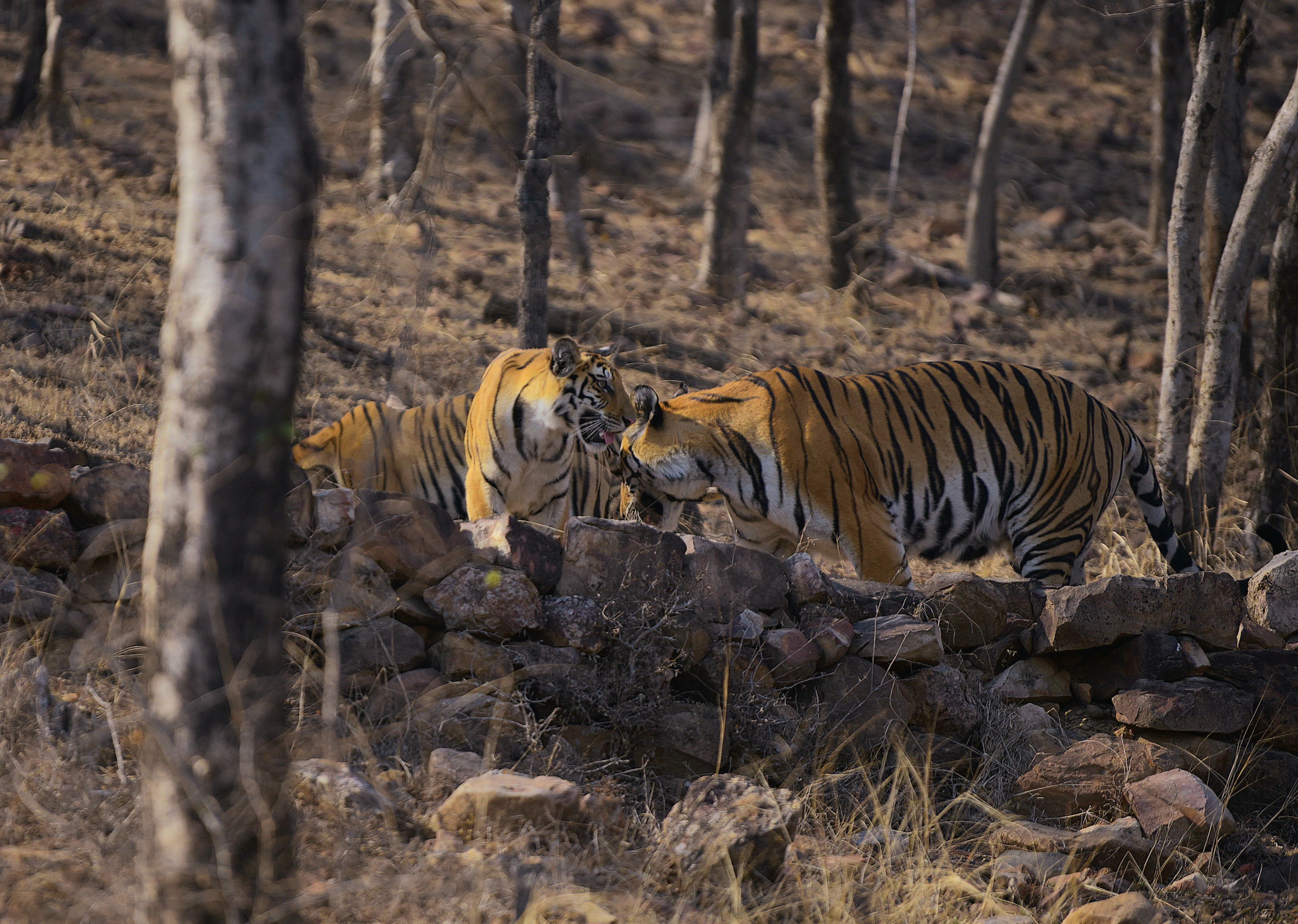
T141 with her cubs
 Tiger Tales of India
Panna is a wonderful tiger reserve. Great to know the tigers are doing so well there now.
LikeLiked by 2 people